
Websites & digital platforms
B2B Website Development for Long Sales Cycles and Multiple Decision-Makers
A B2B website has to serve a long, multi-stakeholder buying process, not just look good.
Free tools
Digital Growth and Website Conversion Assessment
Short answer
A B2B website is not a digital brochure — it needs to support the full buying journey: speak to different roles (end user, procurement, management), explain a complex offer clearly, and qualify leads so sales starts with the right information. B2Social builds websites around structure, clear content and measurable conversion points rather than design alone.
What you need to know
B2B sales cycles often run for weeks or months, and rarely does one person decide alone. The website has to serve several audiences at once: a technical buyer wants specifications, procurement wants cost and risk, management wants strategic value. Without a clear structure you lose exactly the visitors who later influence the budget decision.
Content matters more than visual polish in B2B. Pages need to answer concrete questions: what you actually do, for whom, with what approach, and how you differ from alternatives. Generic marketing copy without substance is spotted quickly by experienced buyers and damages trust more than it builds it. Real project work carries more weight than claims.
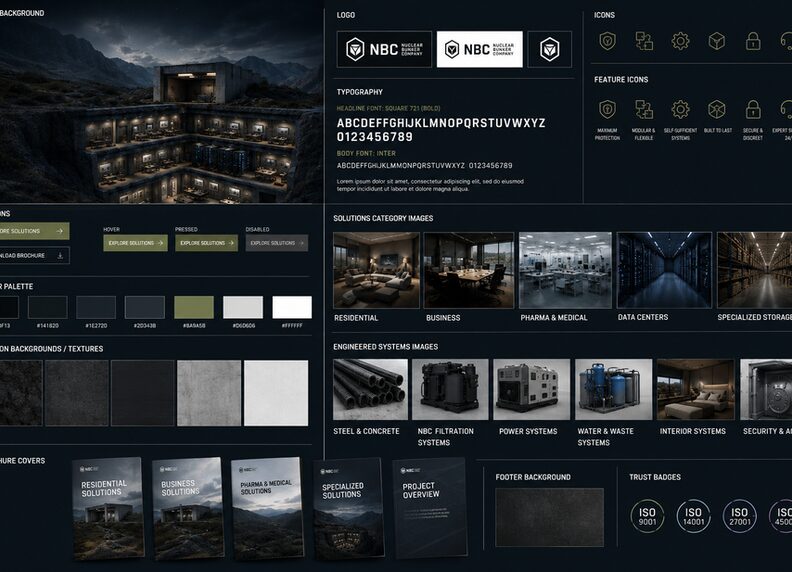
Lead qualification starts on the website, not in the first sales call. Forms, content depth and clear calls to action help filter early who genuinely fits your offer. B2Social applied this with NBC, a construction and engineering company: positioning, visual identity and a new website that make complex services understandable for different audiences.
Practical examples
Multiple decision-maker roles
A software vendor's site with separate content tracks for IT, the business department and finance, so each role finds what is relevant to them.
Technical services company
NBC: positioning and a new website for construction and engineering that translate complex services into clear, understandable offer pages.
Lead qualification through forms
Staged contact forms that capture budget, timeline and need before the first call, so sales starts prepared instead of guessing.
Content for long decision paths
Resource pages and FAQs that keep prospects engaged over weeks, even when they do not reach out immediately.
How to make the right choice
Audience clarity
Does the website know who it is addressing and when, or does it try to reach everyone with the same message?
Content depth
Do the pages answer specific, substantive questions, or do they rely on interchangeable marketing phrases?
Pre-call qualification
Does the site filter leads before a conversation, or does every enquiry land unsorted in the same inbox?
Maintainability
Can your team update content independently, or does every change require outside help?
Measurement
Is it clear which on-site behaviour counts as a qualified lead?
When this is not the right choice
- If your sales process is short and transactional, you do not need an elaborate B2B structure — a simple, fast page will serve you better.
- Without an internal contact who can supply subject-matter detail, even the best structure will stay shallow.
- A new website will not fix positioning problems that are strategic rather than design-related.
How B2Social approaches it
- 01
Clarify positioning
We work out with you how you differentiate from alternatives and which message matters to which audience.
- 02
Plan structure and content
Page structure, content depth and forms are aligned with your customers' actual decision-making process.
- 03
Build
We build the website with clean technical foundations, focused on speed, mobile performance and easy maintenance by your team.
- 04
Measure and refine
After launch we check where visitors drop off or convert, and adjust content accordingly.
Frequently asked questions
How does a B2B website differ from a B2C website?
B2B websites need to inform and qualify multiple decision-makers over a longer period, while B2C websites usually target faster, more individual decisions. Structure, content depth and forms look different as a result.
How long does building a B2B website take?
It depends on scope and content depth. A clear structure and content that is ready early speed the process up considerably compared to projects where copy is written during development.
Do we need a separate page for every audience?
Not necessarily separate pages, but at least clearly separated sections or paths so, for example, technical and commercial visitors quickly find what is relevant to them.
How do you measure success with long sales cycles?
Rather than only tracking closed deals, it helps to measure intermediate steps: form completions, downloads, repeat visits and the quality of incoming enquiries.
Does B2Social also work on existing websites, not just new builds?
Yes, reworking structure and content is often more sensible than a full rebuild, particularly when the underlying technology still works fine.
Related services
Web Development
Fast, findable websites with clear conversion paths.
Learn moreAI Website Development
AI-powered websites built for business performance.
Learn moreStrategy & Advice
Digital marketing strategy and positioning.
Learn moreRelated projects
Construction & engineering
NBC
Website, branding and social media
Professional services
Lima Solutions
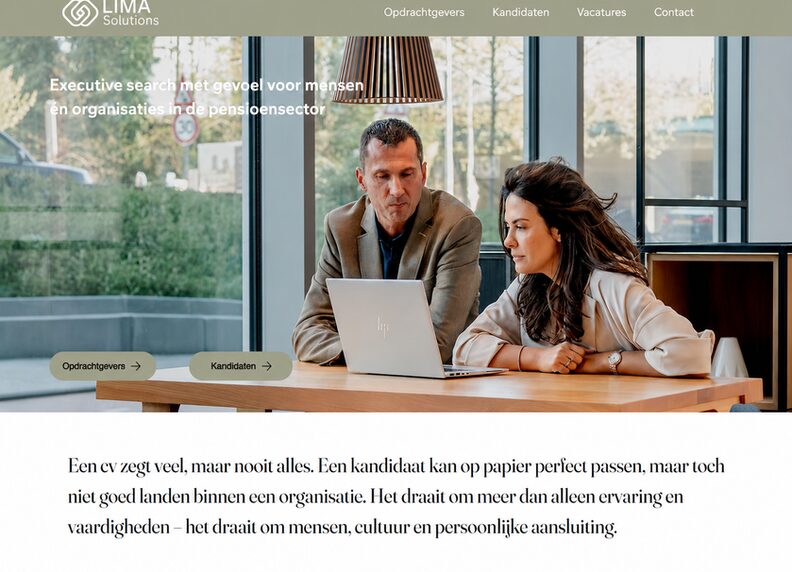
Website optimisation and usability
Installation & energy
Find Electric
Website development and design
Guides and background
Web Development
AI website development for businesses
What AI really changes in website development — and what still requires strategy and craft.
6 min read
Business Efficiency
How to identify revenue leakage in your business
Where businesses typically lose revenue — and how to find and prioritise the leaks.
6 min read
Related software
Related topics
Website Conversion Optimisation: Finding and Fixing Drop-Off
Conversion optimisation starts with finding exactly where and why visitors leave without converting.
Website Development in Amsterdam
A new website for Amsterdam businesses, with in-person meetings close by.
Digital Platform Development: When a Website Becomes a Platform
A platform adds accounts, data and logic on top of a website — and different decisions follow.
Let's discuss your situation
Tell us where you are and what you want to achieve. You'll get a direct, practical answer — no sales script.